2026-02-05 19:44:32
How Galvo Structure Influences Weld Quality and System Stability
— Application Insights from Foster Laser Welding Systems
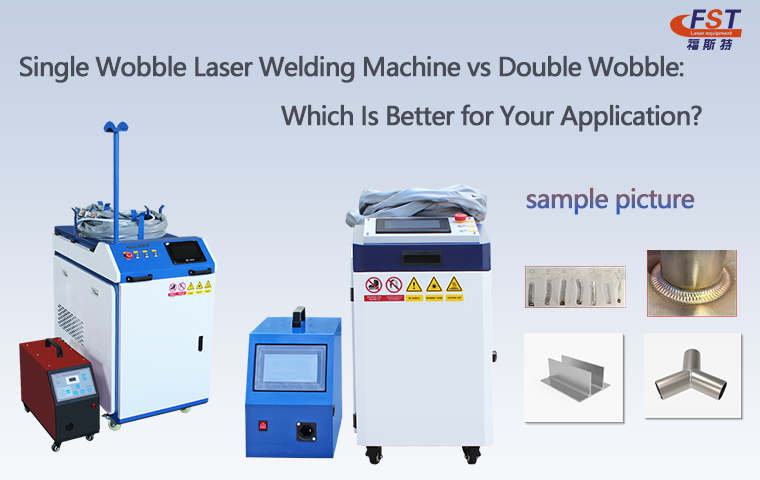
In laser welding machine applications, the galvo scanning system not only determines beam motion patterns, but also has a direct impact on welding stability, weld seam quality, and long-term maintenance efficiency. Based on extensive field application feedback, Foster Laser has optimized both single-wobble and dual-wobble welding systems. The following comparison highlights their structural design, operational performance, and welding characteristics.
FIRST System Structure: Design Complexity Defines Reliability
Dual-Wobble Welding System
The dual-wobble configuration utilizes two galvo scanners working in coordination to control the laser beam path. The beam undergoes multiple reflections before forming a wobbling trajectory on the workpiece surface.
This structure offers a larger processing coverage and is well suited for automated and continuous welding applications. However, it involves a more complex system design and higher requirements for installation space and mechanical rigidity.
Single-Wobble Welding System
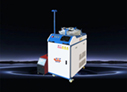
The single-wobble system employs only one galvo scanner to generate beam oscillation, producing a linear wobble pattern on the weld seam.
With a more compact structure, reduced weight, and higher integration, it is particularly suitable for handheld welding and flexible, multi-scenario applications.
SECOND Operational Performance: Stability and Ease of Use
System Stability
Thanks to a shorter optical path, fewer internal connections, and lower galvo load, the single-wobble system demonstrates superior operational stability during long-term continuous welding, resulting in enhanced overall system reliability.
Operation and Calibration
In single-wobble systems, red-light positioning is clear and intuitive, and beam center adjustment is straightforward, significantly reducing operator learning time.
Dual-wobble systems, by contrast, require coordinated adjustment of multiple reflective components, making setup and calibration more complex and dependent on experienced technicians.
THIRD Welding Performance: Different Process Strengths
Single-Wobble Welding Characteristics
With higher energy concentration and faster molten pool response, the single-wobble system delivers stronger penetration and consistent, well-formed laser equipment weld seams. It is especially suitable for wire-feeding welding, thin sheet processing, and applications with high weld quality requirements.
Dual-Wobble Welding Characteristics
The dual-wobble system provides a more uniform beam distribution over a wider area, offering advantages in automated production lines and large-area or continuous welding tasks.
FOURTH Maintenance Efficiency: Long-Term Cost Considerations
The single-wobble system features a clearer structural layout and higher serviceability, allowing faster lens replacement and routine maintenance.
Combined with Foster Laser’s optimized control interface, system status monitoring and fault diagnosis can be performed quickly, significantly reducing maintenance time and after-sales costs.
Key Conclusions
✨Single-Wobble Welding System: Compact structure · High stability · Easy operation · Ideal for flexible and high-quality welding
✨Dual-Wobble Welding System: Wide processing coverage · Better suited for automated and continuous welding applications
With mature galvo design expertise and strong system integration capabilities, Foster Laser delivers laser welder solutions that are more reliable, efficient, and easier to maintain across diverse application scenarios.
👉 Interested in learning more about our laser cutting, welding, or cleaning machines? Feel free to contact Us:+86 15314155887—he’s ready to provide expert guidance and the ideal solution for your needs.