2026-10-19 15:00:25
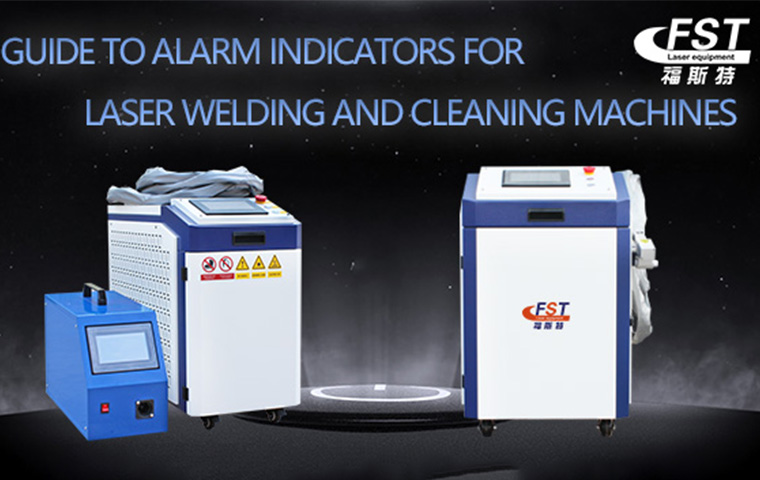
With the rapid popularization of handheld laser welding and cleaning integrated machines in metal fabrication, stable equipment operation and rapid fault diagnosis have become key concerns for workshop operators. Laser machines are fitted with multiple alarm indicators to reflect real-time working status. Timely identification of different alarm signals helps users locate abnormalities quickly, reduce unexpected downtime and extend equipment service life. It also lowers the risk of misoperation and guarantees continuous and safe industrial processing.
To fully explain the alarm logic and troubleshooting methods of laser welding and cleaning machines, this guide systematically introduces common alarm types, indicator rules, root causes and simple handling suggestions. It provides reliable operation references for equipment operators, maintenance technicians and factory managers.
The alarm indicator system is a built-in safety monitoring module of laser welding and cleaning machines. It continuously tracks core parameters including internal temperature, laser source status, water/air cooling system, circuit voltage, safety interlock and optical path. When parameters exceed the preset safe range, corresponding indicator lights will be triggered to send visual alerts.
Different colored indicators represent different status: normal running, warning reminder and fault alarm. Operators can judge machine conditions without complex detection tools. This real-time monitoring system is available for both laser welding mode and laser cleaning mode.
This alarm activates when the internal temperature of laser source or control cabinet exceeds the safe threshold.
It belongs to safety protection alarm, triggered when safety circuit is disconnected.
This indicator shows abnormality of fiber laser source.
Triggered when input voltage is unstable or circuit connection is loose.
For air-cooled or water-cooled laser welding/cleaning equipment.
The alarm indicator system greatly improves the usability of laser welding and cleaning machines. For hardware workshops, auto part refurbishment and ship maintenance sites, operators can quickly identify simple faults on site instead of waiting for remote after-sales support. It protects expensive laser components, cuts production downtime and ensures safe long-hour operation in both laser welding and laser rust/paint stripping work. This visual warning system has become a standard configuration for industrial handheld laser equipment.
The alarm indicator system acts as the safety "warning light" for laser welding and cleaning machines. Mastering the definition and troubleshooting of each alarm indicator helps operators use laser equipment more safely and efficiently. Regular maintenance plus correct alarm response can maximize equipment stability, reduce maintenance costs and bring stable benefits for metal processing enterprises.
Interested in learning more about our laser cutting welding, or dleaning machines? Feel free to contact Us: 86 1531415s887 hes ready to provide expert guidance and the ideal solution for your needs.