2026-05-15 20:05:58
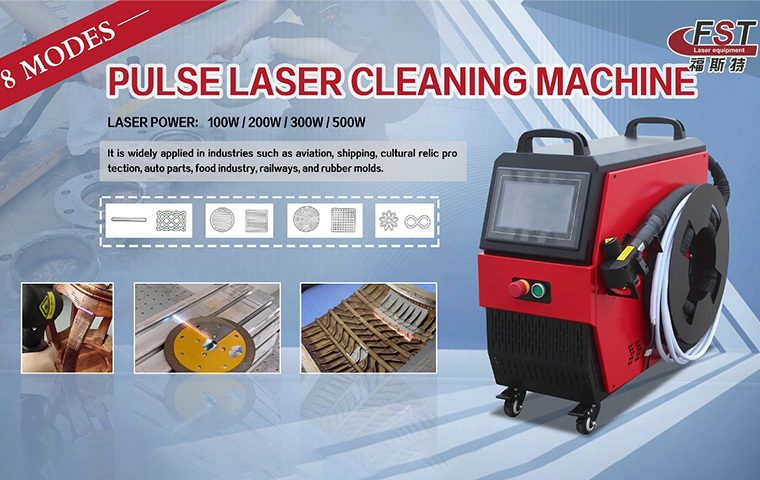
📌📌📌With the rapid advancement of laser cleaning technology across industrial manufacturing, cultural relic restoration, and high-end surface treatment industries, pulsed laser cleaning machines and continuous laser cleaning machines have become two mainstream solutions in the market. Although both belong to the category of laser cleaning systems, they differ fundamentally in energy delivery methods, thermal impact control, cleaning precision, and application scenarios. Among them, pulsed laser cleaning technology has demonstrated superior advantages in precision cleaning applications due to its higher accuracy and significantly lower risk of substrate damage.
📣FIRST Different Working Principles Determine Cleaning Performance
Continuous laser cleaning machines operate through a constant energy output mode, where the laser beam continuously irradiates the workpiece surface. Contaminants are removed through thermal ablation, melting, or vaporization. However, because energy remains concentrated on the same area for an extended period, heat accumulation can occur on the substrate surface, potentially causing discoloration, oxidation, thermal deformation, or even microcracks. Therefore, continuous laser cleaning is more suitable for materials and applications with lower sensitivity to thermal effects.
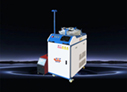
In contrast, pulsed laser cleaning machines utilize high-peak-power, short-pulse energy output. The laser releases energy instantaneously within an extremely short duration, selectively removing contaminants while minimizing heat transfer to the substrate. This “cold processing” characteristic allows the original structure, surface finish, and dimensional accuracy of the material to be preserved, enabling truly non-destructive cleaning.
📣SECOND Significant Differences in Thermal Impact Control
In industrial applications, the Heat Affected Zone (HAZ) is a critical indicator for evaluating cleaning quality. Due to stable and continuous heat input, continuous laser systems are more likely to generate larger thermal impact areas, especially when processing thin materials, precision components, or highly reflective substrates. In some cases, irreversible damage to the workpiece may occur.
Pulsed laser systems, however, offer precise control over cleaning depth and processing range through adjustable pulse frequency and instantaneous energy release. They effectively remove oxidation layers, oil residues, coatings, and rust without affecting the substrate’s surface roughness or mechanical properties. This high level of precision makes pulsed laser cleaning particularly competitive in advanced manufacturing industries.
📣THIRD Different Application Scenarios
Continuous laser cleaning machines are generally more suitable for large-area and heavy-duty industrial cleaning applications, including:
🎉Removal of thick metal rust layers
🎉Large-scale paint stripping on steel structures
🎉Surface pretreatment of industrial equipment
🎉Oxide layer removal in shipbuilding and heavy machinery industries
Their primary advantages are high cleaning efficiency and strong performance under heavily contaminated conditions. However, their adaptability to delicate or precision materials is relatively limited.
By comparison, pulsed laser cleaning machines are ideal for applications requiring high cleaning precision and maximum substrate protection, including:
Cultural Heritage Restoration and Artwork Conservation
Pulsed laser technology can accurately remove oxidation, dirt, and aged deposits from cultural relic surfaces while preserving original textures, colors, and historical details. It is widely used in the restoration of stone carvings, bronze artifacts, murals, and ancient architectural structures.
Urban Graffiti Removal
For wall graffiti cleaning, pulsed lasers can selectively eliminate paint layers without damaging the original wall coating, stone surface, or brick structure. This effectively prevents secondary damage and chemical corrosion commonly associated with traditional cleaning methods.
Precision Industrial Manufacturing
In industries such as aerospace, electronics, precision molds, and new energy battery manufacturing, pulsed laser cleaning achieves micron-level precision. It is commonly applied in pre-welding treatment, precision degreasing, coating removal, and micro-surface processing.
Cleaning of High-End Wood Products and Sensitive Materials
For wooden furniture, carbon fiber composites, and delicate crafts, pulsed laser cleaning can deliver high-quality cleaning results without burning, carbonization, or surface damage.
📣FOURTH Industry Development Trends
As modern manufacturing continues evolving toward higher precision, environmental sustainability, and intelligent automation, market demand for low-damage and high-efficiency laser cleaning equipment is rapidly increasing. With advantages such as non-contact operation, zero consumables, low thermal impact, and environmentally friendly processing, pulsed laser cleaning technology is gradually replacing traditional methods such as sandblasting and chemical cleaning, becoming a key solution in advanced surface treatment industries.
Meanwhile, continuous laser cleaning systems continue to maintain stable demand in heavy industry and large-scale cleaning applications, where their high operational efficiency offers significant cost advantages.
✨✨✨Conclusion
The core difference between pulsed laser cleaning machines and continuous laser cleaning machines lies in their laser energy output methods. Continuous laser systems are better suited for high-efficiency, large-area industrial cleaning tasks, while pulsed laser systems excel in precision cleaning applications due to their lower thermal impact, higher processing accuracy, and superior substrate protection capabilities.
As laser technologies continue to advance, pulsed laser cleaning is expected to play an increasingly important role in high-value industries, driving industrial cleaning processes toward greater intelligence, efficiency, and environmental sustainability.
👉 Interested in learning more about our laser cutting, welding, or cleaning machines? Feel free to contact Us:+86 15314155887—he’s ready to provide expert guidance and the ideal solution for your needs.